IN SHORT
• A climate chamber accurately simulates controlled climate conditions, from -50°C to +120°C and from 20% to 98% relative humidity, for applications in testing, research, and production.
• The four primary parameters are temperature, relative humidity, air circulation, and light intensity. Depending on the application, parameters such as CO2 concentration, ethylene content, or pressure are also added.
• Applications range from pharmaceutical stability tests (ICH Q1A) and seed breeding research to battery climate tests.
A climate chamber, also referred to as a climate cell, test cell, test chamber, or growth chamber, is an enclosed space or housing where climatic conditions are precisely set and constantly monitored. The system combines cooling (refrigeration technology), heating, and humidification or dehumidification into one integrated unit, controlled by a process controller that maintains setpoints within a narrow tolerance range.
Climate chambers fall into two categories. Small climate cabinets or climate chambers with a volume smaller than 5 m³ are used on a laboratory scale for samples, cultures, or small components. Large climate chambers or climate cells, with a volume of more than 5 m³ up to sometimes hundreds of cubic meters, are intended for full-size products, vehicles, complete crops, or production processes. Nijssen builds both categories but specializes in the large class with custom walk-in climate cells.
Temperature is the most defining parameter. The range extends from -50°C for cooling and climate tests to +120°C for heating and drying applications. Humidity ranges from 20% to 98% relative humidity.
Relative Humidity is regulated between 10% and 98% RH, with an accuracy typically of ±1 to ±3% RH. Humidification occurs via steam dosing or ultrasonic nebulizers; dehumidification is achieved through cooling or adsorption drying.
Air Circulation determines the homogeneity of temperature and humidity within the test volume. A carefully calculated airflow pattern ensures that deviations within the test volume remain within the specified tolerances. In practice, this homogeneity is at least as crucial for measurement quality as setpoint accuracy.
Light Intensity and Spectrum are relevant for plant growth (PAR light, expressed in µmol/m²/s), photostability testing in the pharmaceutical industry (ICH Q1B, UV/VIS spectrum), and photoperiod simulation.
Additional parameters for specific applications include CO2 concentration for plant growth, respiration research, ethylene levels for ripening simulation, and O2 levels for CA storage and altitude simulation.
Pharmaceutical research and stability testing. Climate chambers for the pharmaceutical sector are set to the conditions prescribed by ICH Q1A for long-term and accelerated stability studies: 25°C/60% RH and 40°C/75% RH. This concerns drug shelf life and vaccine storage. Photostability research falls under the separate standard ICH Q1B.
Seed breeding and plant research. Climate chambers simulate controlled day and night cycles, photoperiodicity, and vernalization, a cold treatment that initiates flowering in certain crops. For this segment, Nijssen has developed the MyGrowthRoom concept as its own IP product, specifically aimed at the requirements of large-scale seed breeding.
Food technology and storage. Climate chambers are used for ripening simulation, cold chain validation, and storage conditions for perishable products.
Electronic and automotive testing. Temperature shock tests range from -40°C to +125°C, humidity exposure, and HALT (Highly Accelerated Life Testing) fall under NEN-EN 60068, the European standard for climatic and mechanical tests on electrical and electronic components.
Museums, archives, and defense. Storage conditions for artworks and archival materials require stable climate control within narrow bandwidths. Defense material tests impose similar requirements for repeatability and documentation.
Standard climate cabinets are quickly available and have a lower purchase price. They are suitable for lab scale, with a fixed temperature and humidity range. For many laboratory applications, this is sufficient.
Custom climate cells become necessary when the volume is larger than can be accommodated by a catalog product, parameters fall outside standard ranges, integration with existing production infrastructure is required, or the application has specific requirements that a standard unit cannot support. Examples include ripening rooms with ethylene control, large-scale seed storage, or multi-layer growth systems.
A practical rule of thumb based on Nijssen's project experience: for volumes exceeding 10 m³ and a combination of three or more controllable parameters, custom solutions are generally more cost-effective in terms of Total Cost of Ownership (TCO) than a catalog solution. The difference lies not only in the purchase price but also in energy consumption, manageability, and the system's lifespan.
Lorem ipsum dolor sit amet, consectetur adipiscing elit, sed do eiusmod tempor incididunt ut labore et dolore magna aliqua. Ut enim ad minim veniam, quis nostrud exercitation ullamco laboris nisi ut aliquip ex ea commodo consequat. Duis aute irure dolor in reprehenderit in voluptate velit esse cillum dolore eu fugiat nulla pariatur.
Block quote
Ordered list
Bold text
Emphasis
Superscript
Subscript
In the Dutch market, the terms are often used interchangeably. 'Klimaatkamer' (climate chamber) usually refers to a walk-in room, while 'klimaatcel' (climate cell) can also denote a smaller unit. Nijssen uses 'climate cells' for walk-in units of 3 m³ and larger, and 'climate cabinets' for laboratory units.
Standard laboratory cabinets typically cost between €5,000 and €25,000. Custom walk-in climate chambers from Nijssen range from €50,000 to €500,000 or more, depending on volume, parameters, and application requirements. Without specifications, an accurate price estimate is not possible. Therefore, a consultation is the best first step.
That depends on the class and application. Standard laboratory units operate at ±1°C; high-precision research chambers achieve ±0.1°C. ISO 17025-certified calibration ensures measurement accuracy. The homogeneity within the test volume, measured at a minimum of five points, is often at least as critical in practice as the setpoint accuracy.
The choice of a climate chamber largely depends on the application requirements. Standard catalog units suffice for much laboratory work with known parameters and manageable volumes. However, as soon as the volume increases, the parameter combination becomes more complex, or integration with production infrastructure is required, a custom solution delivers a better TCO (Total Cost of Ownership) in the long run.
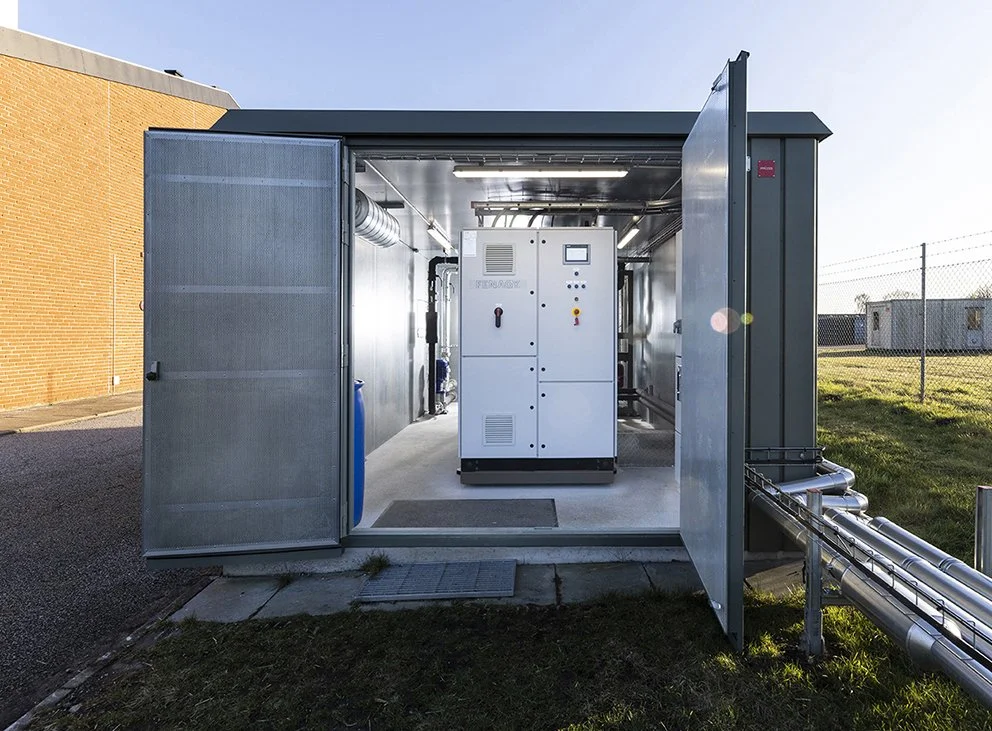

Discover when an industrial heat pump is cost-effective. Includes a decision model, grant overview, and insights into the conditions for achieving a payback period of less than five years.

Cleaning a climate chamber seems simpler than it is, until the panel coating starts blistering after a few months. The combination of high humidity, feed water, and the specific material
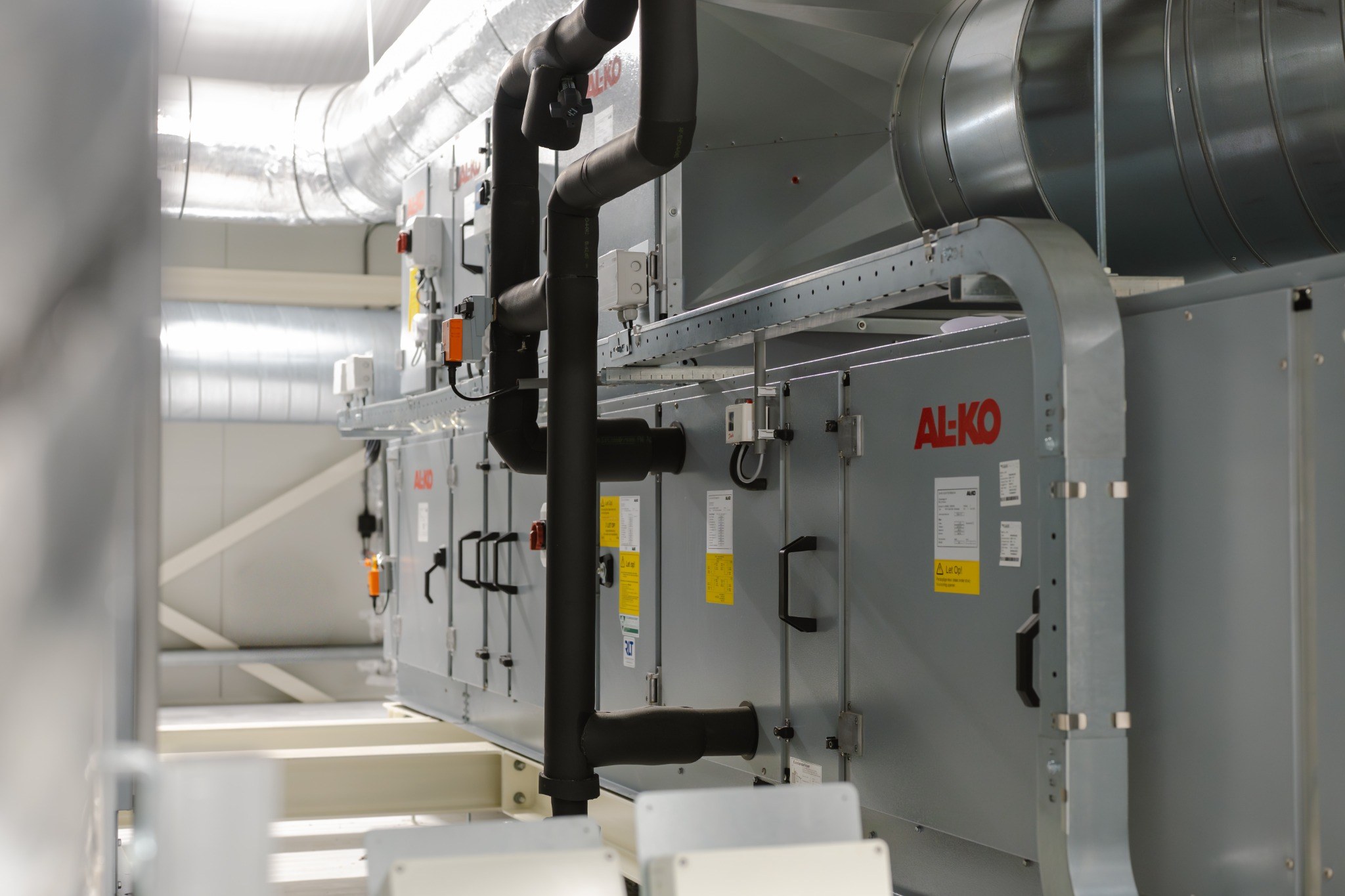
Natural refrigerants are a future-proof alternative to R404A and R507F. This article compares ammonia, CO₂, and propane in terms of cost, safety, and application.
Receive our latest technical publications and project updates directly in your inbox every month.

Lorem ipsum by sit amet, consecteur adipising elite. Suspension tincture of sagittis eros. Quisque quis euismod lorem. Etiam sodales ac felis is interdum.